- 3Third keepersince Jun 2023Current
- 2Second keeperFeb 2020 – Jun 20233y 4m
- 1First keeperMar 2018 – Feb 20201y 11m
Ownership history
Every keeper change in order, with how long each one kept the car.
Enter a UK registration plate to read its DVLA record and full MOT history free. The full report follows the plate back through earlier registrations, finance, write-offs and police records.
Works withcarsEVsvansmotorbikes
A full report checks 200+ data points, including:
Six of the records, drawn the way they appear in the report. A full report checks 200+ data points in all; see every check.
Every keeper change in order, with how long each one kept the car.
Every recorded reading on one line. A reading that goes backwards stands out at once.
Category S write-offStructural damage recorded, 14 Sep 2023
The insurance category, the date of loss and whether it passed the identity check.
Finance agreement foundLive
Any hire purchase, PCP or conditional sale still registered, so you know who to call before you pay.
Police stolen markerNot recorded
VIN and engine numberMatch the record
High-risk registerNo marker
The police stolen marker, the high-risk register and the numbers that catch a cloned car.
Colour change: blue to grey, 2022
Every earlier registration with its dates, and any colour change the DVLA recorded.
Made-up figures, to show the layout.
Check any UK-registered car, van or motorbike by its reg or VIN, whatever the make. These are the makes buyers check most.
Logos are shown to identify the makes we check. We are not affiliated with or endorsed by any manufacturer.
A reg plate check takes the registration on a car’s number plate and returns the records filed under it. The free result reads two files: the DVLA’s register entry (make, model, colour, fuel, engine size, build year, first registration, tax) and the DVSA’s list of MOT tests from 2005, each with its defects and odometer reading. The full report goes to the records held outside government: outstanding finance, insurance write-offs, the police stolen marker, keeper count, earlier plates and colour changes, imports, exports and scrapping. Enter any UK plate above, or a 17-character VIN.
The plate is where every check starts because it’s the one identifier on show. That’s also why it’s the first thing a criminal changes. A good registration plate check reads the record, then makes you look at whether the car still fits it.
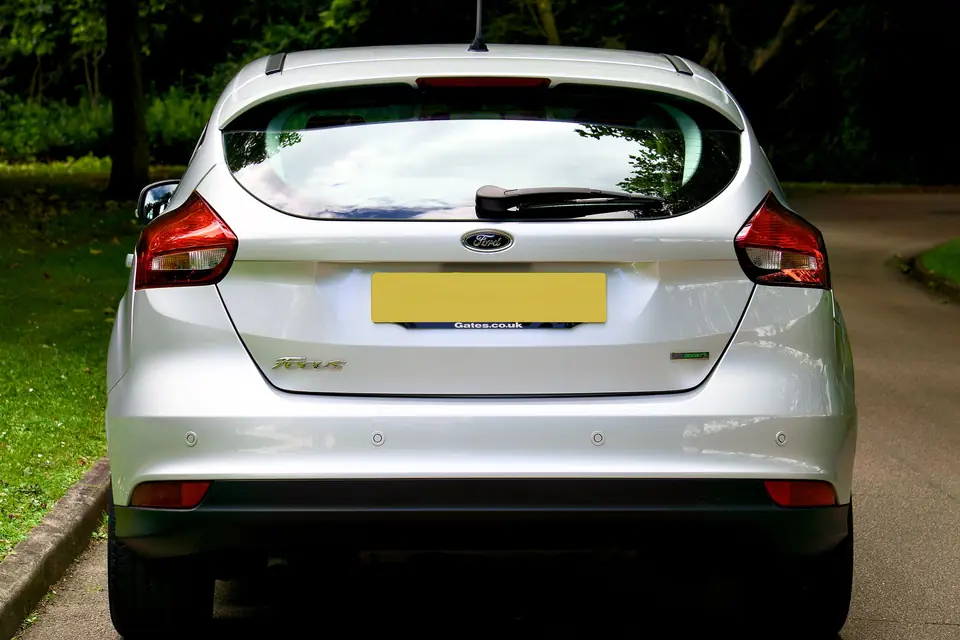
Every UK number plate links to a DVLA record and an MOT history. Read them before you look at the paintwork.
Check a number plateThe DfT counted 34,888,100 licensed cars at the end of June 2026. Each has a registration mark issued by the DVLA, and every official record about that car, from its tax to its MOT results, is keyed to it. Move a private plate on or off and the records follow the car, not the plate: the old registration is linked to the new one.
That link is why a plate check can show a car’s earlier registrations. The number plate check explains how to read them.
Inside every full report
We check 200+ data points on every full report. These are the 21 checks they come from, each one shown on the report page in plain English.
Each of these leaves a mark on the records. None of them shows on the plate itself.
Copies of a legal car’s plates on a stolen car of the same model. The record is clean because it belongs to the other car. Our cloned number plate guide shows how to catch it.
A private plate can mask a write-off or an import on a quick look. The full report lists every earlier registration. See the private plate guide.
Nothing on the plate or the V5C shows a lender’s claim. Only the full report reveals one. Should a lender appear, read our car finance check before any money moves.
A car recorded as destroyed, back on the road under its old plate. The scrapped car check explains the two ways this happens.
A private plate hides the age identifier. The car age check gives the real first registration date.
Each MOT records the odometer. A lower reading than the year before shows in the free MOT check by number plate.

After you pay, any finance or theft problem on the car becomes yours to sort out. The full report shows those records first, while you can still walk away.
The free result costs nothing and has no sign-up. The full report covers one registration for a single payment.
Full report
£11.99
One car, paid once. VAT included, no subscription, no account.
Start with the registrationThe basic check (MOT history, mileage, tax and vehicle details) stays free.
It’s a lookup of the records the UK holds against a vehicle registration. You type the plate; the check returns what’s on file. Nobody inspects the car and the seller isn’t asked anything. Registration plate check, number plate check, reg check: different words for the same search.
Two sources are public and free: the DVLA’s register of vehicles and the DVSA’s MOT database. The rest of a car’s past, such as money owed against it, an insurer’s total loss decision or a police report, is held privately and reached through licensed data providers. That split decides what’s free and what’s in the paid report.
| Record | Free or full | Source | Why it matters |
|---|---|---|---|
| Make, model, colour, fuel, engine size | Free | DVLA vehicle register | Whether the plate matches the car it’s on |
| Year of manufacture, first registration date | Free | DVLA vehicle register | The car’s true age, whatever the plate says |
| Tax status and expiry | Free | DVLA vehicle register | Taxed, untaxed or SORN today |
| MOT tests and odometer readings | Free | DVSA MOT database | How it’s been kept, and whether the miles add up |
| Earlier registrations | Full report | Registration history, via licensed providers | Whether a plate change hides anything |
| Keeper count, V5C issue dates | Full report | Registration history | How often it changed hands, and when |
| Outstanding finance | Full report | Lenders’ registered agreements | Whether the seller owns it outright |
| Insurance write-off | Full report | Insurers’ records of total losses | Whether an insurer wrote it off |
| Stolen marker | Full report | Police National Computer | Whether it’s reported stolen |
| Imported, exported, scrapped | Full report | DVLA markers | Whether the identity has been abroad or declared dead |
For sorting a shortlist, it usually is. For deciding to pay, it isn’t.
The free result exposes plates on the wrong car, MOTs that have lapsed and mileages that went backwards, and that clears out a lot of bad cars at no cost. It can’t see the expensive problems. A cloned car shows a perfect record, because the record belongs to a different, legal car. A car on finance shows nothing unusual on the DVLA or MOT side. A repaired write-off may have passed every MOT since. All three need the full report, and a cloned car needs you to match the VIN as well.
A plate issued since September 2001 reads like this: two letters, two numbers, three letters. Take “BD51 SMR” as an example. “B” is the region (Birmingham), “D” a local office code within it, “51” the age identifier, and “SMR” a random sequence.
| Age identifier | First registered |
|---|---|
| March number = the year’s last two digits (e.g. 24) | 1 March to 31 August of that year |
| September number = the year’s last two digits + 50 (e.g. 74) | 1 September to the end of February |
| 26 and 76 | March to August 2026, and September 2026 to February 2027 |
So a “74” car was first registered between September 2024 and February 2025. The plate gives a six-month window; the record gives the date. The full history back to the first suffix and prefix plates is in our number plate years guide. A plate can legally make a car look older but never newer: you can’t put a 24 plate on a 2019 car.
Not every plate follows the 2001 format, and the older styles carry their own clues.
Prefix plates (1983 to 2001). One letter at the start gives the year, as in “R123 ABC” for a car first registered between August 1997 and July 1998. A prefix car today is at least 25 years old, so the MOT history matters more than usual: look for corrosion advisories spreading from one test to the next.
Suffix plates (1963 to 1983). The year letter sits at the end. These cars are often classics, and many have spent years laid up, so gaps in the MOT record are common and not necessarily a worry. A suffix plate can also be a cherished registration moved onto a modern car, which the first registration date will reveal at once.
Dateless plates. No age identifier at all, such as “ABC 1”. These are private plates and say nothing about the car’s age. The personalised plate guide explains what to check when one is on the car you’re buying, including the transfer paperwork.
Q plates. The DVLA issues a Q registration when a vehicle’s age or identity can’t be established, for example a kit car or a rebuild from parts of unknown origin. A Q plate isn’t illegal, but it tells you the identity was in doubt at some point. Ask why, and expect the price to reflect it.
Northern Ireland plates. Three letters and up to four numbers, such as “AXZ 1234”, with no age identifier. The DVLA record covers them, but MOTs there are run separately, so the free MOT history may be empty. The plate format is explained in more detail on the number plate check page.
Plates are part of the MOT. The tester checks they’re secure, legible, the right colours (white at the front, yellow at the back) and in the approved characters and spacing. Plates with altered spacing or a stylised font to spell a word can fail. That matters when you buy a car on a “show plate”: the advert photos may look fine, but the car could fail its next test on the plates alone. The MOT check by number plate shows if a previous test flagged the registration plate, and the DVLA check confirms the registration is genuinely assigned to that car.
Identity. All five details should match. A colour difference can be an unrecorded respray; an engine or model difference usually means the plate came off another car.
Age. If the first registration date doesn’t fit the plate’s age identifier, the plate is personalised or the car is an import. Both legal; find out which. The car registration check walks through both cases.
Status. Tax and MOT valid means the car can be driven with insurance. SORN means it can’t, except to a booked MOT.
History. Steady mileage, fails fixed quickly, advisories dealt with: a car someone looked after.
Full report. Finance means don’t pay until it’s settled. Write-off means price it accordingly. Stolen or scrapped means walk away and call the police.
A car with outstanding hire purchase or PCP finance still belongs to the lender. Part 3 of the Hire Purchase Act 1964 can protect an honest private buyer who had no idea about the agreement, though never a trader, and you may have a dispute with the lender in the meantime. A stolen car is worse: no such protection exists, and police can return it to its owner or insurer. Handling goods you know are stolen is an offence in itself. On the road, GOV.UK sets fines of up to £1,000 for no valid MOT, and a £300 fixed penalty with 6 points for driving uninsured. Number plates themselves have rules too: GOV.UK sets out how they must be made and displayed, and plates that break them can fail an MOT.
Use the check to decide which cars are worth seeing, then look at the car with the report in your hand.
Owners run their own registration for practical reasons: the tax due date, the MOT expiry, the Euro standard before a trip into London, or what a buyer will see when the car goes up for sale. It’s also the quickest way to confirm a private plate transfer has gone through. Once the DVLA has processed it, the free check on the new plate returns your car, and the full report lists the old registration among its previous plates. If parking or speeding letters arrive for a place you’ve never driven, run your plate first to confirm the record still describes your car, then report a suspected clone to the police with that evidence.
What GOV.UK says about trailer plates, lights and equipment, and when a trailer needs registering.
What sets the value of a private plate, how to value and sell yours, and the DVLA fees and paperwork involved.
What the GOV.UK plate rules say about raised characters, which features break them and what an illegal plate risks.
The DVLA entry, tax, MOT history and odometer readings are free; only the full report costs.
No. That’s protected personal data. The full report gives the keeper count instead.
That’s a question for the DVLA’s personalised registrations service. Our check looks up plates already on vehicles.
Yes: VIN and engine number are both listed in the full report.
Enter it above. The free result names the make, model, colour, engine and fuel.
Not from the full report, which lists every earlier registration.
Compare the car’s VIN with the report and the log book. Our cloned plate guide covers the other signs.
The age identifier gives a six-month window. The free check gives the exact first registration date; see the car age check.
Yes for the DVLA record. MOT history may be missing because Northern Ireland runs its own tests.
The full report covers what people mean by an HPI check: finance, write-off, stolen and plate history. What you get without paying is the DVLA record and the MOT trail.
Don’t pay until it’s resolved. For help reading a result, contact us with the registration.
More answers on the reg plate check FAQs page.